I giornalisti? sono sempre più “manager” di contenuti

Mio pezzo per il sito dell’European Journalism Observatory:

I media da unica, o principale fonte di informazioni si stanno trasformando sempre più in custodi e curatori di flussi di contenuti e notizie. È uno dei cambiamenti più evidenti degli ultimi anni; particolarmente accentuato da quando, con l’esplosione dei social media, una parte consistente dell’opinione pubblica si forma e si esprime in Rete. Gli editori stanno cercando di cavalcare e volgere a proprio vantaggio il fenomeno, all’inizio muovendosi un po’ a tentoni, ma via via con tentativi sempre più mirati e strutturati. Alcuni degli esperimenti più interessanti in questo senso provengono dai Paesi anglosassoni; se ne è avuto qualche assaggio in occasione della recente conferenza londinese News:rewired, in un panel intitolato, non a caso, “Curation: the journalist as a manager”.

Leggi tutto l’articolo sul sito di Ejo

 I giornalisti? sono sempre più manager di contenuti

Smart City, al di là della retorica

Scorrendo il dibattito online e in print, sulle Smart City, viene talvolta fatto di chiedersi: quanto è davvero innovazione al servizio del bene comune e quanto invece c’è di push, di spinta da parte di grandi multinazionali i cui laboratori rigurgitano di prototipi, più o meno utili, per i quali è necessario creare uno sbocco sul mercato?

Mi ha fatto piacere, perciò intervistare per Agenda Digitale Matteo Thun, archistar italiana che non ha bisogno di presentazioni, fautore di un approccio più slow, e forse più sano all’argomento.

Qua sotto l’attacco del pezzo. Il resto lo potete leggere sul sito di Agenda Digitale.

Smart sì, ma in maniera diversa. Quando si pensa alle cosiddette “città intelligenti“, termine ormai di moda anche nel lessico dei non addetti ai lavori, la prima immagine che viene in mente è un laboratorio del Mit o qualcosa di simile. Lucine, sensori, e altre diavolerie ipertecnologiche, pensate per trasformare oggetti ormai banali nella loro quotidianità in qualcosa di nuovo e – auspicabilmente – migliore. Razionalizzando i consumi energetici e rispettando l’ambiente.

Obiettivi condivisibili, per raggiungere i quali non occore però necessariamente indulgere in tecno-virtuosismi, come insegna l’esperienza del designer bolzanino Matteo Thun, uno dei maggiori architetti e progettisti italiani viventi, più volte vincitore del Compasso d’Oro e dal 2004 inserito nella prestigiosa Interior Hall of Fame di New York.

Da anni fautore e promotore di un approccio, chiamato Ecotecture, all’insegna della progettazione di opere in armonia con l’ambiente, realizzate con materiali nobili e antichi come il legno e il vetro, e alimentate da energie rinnovabili da quella termica all’eolica. Ecco come ci ha descritto la sua visione.

http://www.agendadigitale.eu/smart-cities-communities/323_a-misura-d-uomo-non-di-tecnologia-le-smart-city-secondo-matteo-thun.htm

 Smart City, al di là della retorica

When journalism makes a difference

The connectivity that came with the Internet, and the support that computing power gives a journalist. Those two tools, and constant

300px Map FreeMove When journalism makes a difference

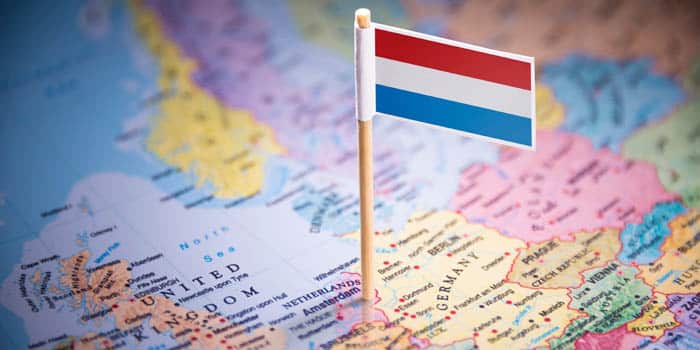
Map of FreeMove in Europe. * Orange: Orange * Dark blue: TIM * Pink: T-Mobile * Light blue: TeliaSonera (Photo credit: Wikipedia)

networking — with high and low, colleagues, people in common and sources all over the world — are the things that have been most important tools for me in my profession.

These are the main tools used by Swedish investigative reporter Fredrik Laurin to do his job, as he himself recounts in a fascinating story on the International Consortium of Investigative Journalists‘ website.

Worth reading.

If money was your object when you went into journalism you are in the wrong industry


Related Multimedia Content: ” How Teliasonera Sells to Dictatorships”


 When journalism makes a difference

Fear not: social media and user generated content will never replace journalists

My report on Paul Lewis‘ seminar “Open Journalism, Social Media and the England Riots” at the Reuters Institute for the Study of Journalism.

The complete article can be found on the RISJwebsite

300px Ian Tomlinson speaking to police Fear not: social media and user generated content will never replace journalists7:20 pm. Tomlinson moments before he was struck Lewis, Paul. The helper: Ian Tomlinson was obeying police orders, says G20 protester, The Guardian, 9 April 2009. (Photo credit: Wikipedia)


Federico Guerrini writes:


Imagine a world without journalists.

For all the fears about the future of the profession, barely a decade ago just the thought of it would have caused a burst of laughter. How were people supposed to get their news, if not through the media?

Facebook was established only in 2004; Twitter a couple of years later: the power of social media had yet to show up.

“Now, the absence of professional journalists,” – explained Paul Lewis, award winning reporter of the Guardian, during a captivating seminar– “would of course cause major problems and disruptions, but the information could still find a way to flow and reach the audience”.

Does it mean that we have to prepare for a scenario of “News without journalists?” in accordance with the title of Paul’s speech?

Fear not. From what was said in the lecture, there’s still room for professionals, as long as they’re able to interpret their role in new ways that take advantage of the new tools available.

To all those still convinced that Twitter is just a fashion and a place for gossip, the Guardian’s use of the micro-blogging site to cover the England riots in 2011 – as depicted in the presentation given at RISJ -  will surely prove to be a mind opening experience. But in Lewis’ talk there was much more than that.

Debunking the official version

The use of Twitter by journalists, of course, didn’t start with the riots. The Guardian itself had used it before with positive results to aid its investigations, on at least a couple of occasions.

First, in the case of the mysterious death of English newspaper vendor Ian Tomlinson during the 2009 G-20 summit protests. After the incident, most of the press stuck to the police account that Tomlinson had died of a heart attack while walking home from work.

Read the complete article on the RISJ website

Related articles

On journalism and content curation

4331368942 3ab1bbf226 m On journalism and content curation

Sree Sreenivasan and Vadim Lavrusik (Photo credit: 92YTribeca)

I’m reading an old, but always valuable article from Niemen Lab by Vadim Lavrusik on curation and amplification.

Some insights: “The cycle no longer stops after a piece is written or a story is curated from the social web. The story is ever evolving, and the post-production is just as important“.

Contributed reporting from the citizenry hasn’t replaced the work of journalists. In fact, it has made the work of journalists even more important, as there is much more verification and “making sense” of that content that needs to be done. And journalists’ role as amplifiers of information is becoming more crucial”.

Whether it’s a written story or one curated from the citizenry using social media tools, we will see a growing emphasis placed on content amplification through distribution (…) at stake is the quality of the information that does the reaching. If content is king, distribution is queen“.

We’ve seen this trend throughout 2012, as Lavrusik predicted; in this field the Guardian keeps leading the way among European newspapers (La Stampa, in Italy, is doing a good job too) and across the ocean the Nyt began experimenting with new formats, for new audiences. What still seems to lack, is tailoring the same content in different ways for different audiences. But I bet in 2013 we’ll start to see some of it too.

Bonus: Lavrusik on media and digital revolution (VIDEO)
 On journalism and content curation

Books: The Digitally Divided Self, by Ivo Quartiroli

4456487678 ac5f9084e2 m Books: The Digitally Divided Self, by Ivo Quartiroli

MIT Museum: Kismet the AI robot smiles at you (Photo credit: Chris Devers)

I’m reading a very interesting book by Ivo Quartiroli (he’s Italian, though the book was written in English),
it’s called the Digitally Divided Self.

I think many of his views fit perfectly with the philosophy and scope of our recently launched Digital Awareness Project.

I’ll get back on this soon. Meanwhile, I gathered some interesting quotes from the book for you to read and reflect upon:

We don’t realize we have become servomechanisms of IT – precisely because IT has weakened the inner skills of self-understanding.

Uninterrupted conscious attention along with silent time to look into our inner world are exactly what is rendered arduous by the technological society which, to use a term dear to Mauro Magatti (2009), sequesters our attention.

This looks like a reverse inquisition. As the Church would condemn anything which wasn’t compatible with Holy Scripture, now it looks like nothing has value if it is not backed by hard scientific proof and plenty of data. With that premise, there can be no value in any inner, philosophical, or ethical quest. What’s not calculable, statistically coherent or scientifically demonstrable is categorized as mere “opinion” and far from truth. Welcome to Technopoly,

But we can just go offline, right? Again, true – but the Internet tends, like a gas, to expand in time and space. It follows us anywhere, through wireless connections and smartphones. With the immediacy of communication through the Net, there is a reciprocal pressure for answers to be fast.

we try to become free of it again by outsourcing it to a mechanical computer, so we can again look at reality without filters. But the very qualities of the mind which could free us from the illusion – sustained inner concentration, meditation and silence, feeling the body fully – are the first to be sequestered by IT.


Bonus (Italian)

Risorse, Economia e Ambiente: Senza potersi fermare link Books: The Digitally Divided Self, by Ivo Quartiroli

http://aspoitalia.blogspot.com/

Riceviamo e pubblichiamo questo scritto di Ivo Quartiroli, che amplia un po’ le tematiche dei nostri post, il cui taglio è solitamente tecnico-scientifico e economico (a volte anche psicologico). In esso ci propone la sua visione filosofica …. Allo stesso tempo, mi sembra che gli imperativi contradditori di cui parla Quartitoli siano essenzialmente parte della natura umana, di chiunque non si rassegni passivamente a lasciarsi trasportare dagli eventi. Anche da chi vuole solo egoisticamente 

 Books: The Digitally Divided Self, by Ivo Quartiroli

Slow Journalism: che cos’è e come raccontarlo

300px Festival Internazionale Giornalismo Perugia Slow Journalism: che cosè e come raccontarlo

Festival-Internazionale-Giornalismo-Perugia (Photo credit: Wikipedia)

Da qualche tempo assai di moda, Slow Journalism è in realtà un termine abbastanza difficile da definire, dato che abbraccia un campo semantico piuttosto vasto, un po’ come il termine “social media”: può riferirsi alle notizie stesse, al modo di produrle o al modo di presentarle su determinate piattaforme.


In questo panel del Festival del Giornalismo di Perugia, assieme a Serena Danna, Andrea Iannuzzi e Andrea Ferrazzi, abbiamo cercato di proporre vari approcci all’argomento e penso ne sia uscita una discussione piuttosto interessante.

Ecco il video del panel


 Slow Journalism: che cosè e come raccontarlo

Oklahoma, uno Storify sul tornado

The Weather Channel, un sito di informazione (non solo metereologica) con sede ad Atlanta, in Georgia, sta curando un interessante, e drammatico Storify su quanto accaduto in Oklahoma.

Le immagini, purtroppo, parlano da sole. Lo trovate qui, o embeddato qui sotto:


I politici italiani e la repressione del Web

300px Grillo  I politici italiani e la repressione del Web

Italiano: Grillo (Photo credit: Wikipedia)

Ma cosa vuoi che sia la disoccupazione record, le famiglie che non ce la fanno ad arrivare a fine mese, le coppie che non possono permettersi un affitto (non parliamo di un figlio), i tagli sempre più drammatici alla scuola, la distruzione lenta ma sistematica della sanità pubblica. I politici italiani, smettono per un attimo di far finta di combattersi fra loro e, destra e sinistra unite, individuano la vera priorità di questa legislatura: mettere il bavaglio al Web.

Ha iniziato un insospettabile, l’onorevole Boldrini, magari anche per motivi legittimi e forse non comprendendo bene come le sue proteste potessero essere strumentalizzate (voglio pensare bene, se non si pensa bene di una con la sua storia, davvero, di chi ci si può fidare?), poi sono scesi in campo i soliti noti.

Ora, io capisco che sentirsi alitare sul muso tutto il disprezzo che tante persone sentono per una categoria percepita come composta in larga misura di opportunisti, possa dare fastidio. Anche se non aiuta certo a stemperare quest’impressione popolare il fatto  che siano stati eletti come sottosegretari individui che tali sono per loro stessa ammissione.

Quello che non capisco è cosa, togliendo ai cittadini anche questa piccola, infinitesima possibilità di manifestare il proprio scontento, sperino di ottenere.

Non serve un genio per capire che negando un problema questo non si risolve da solo. E che il Web, fatta la tara dei soliti imbecilli, canalizza un disagio che ha tutte le ragioni di esistere. E che senza questo sfogo è destinato ad ingrossarsi ancora più velocemente e prima o poi ad esplodere.

Quindi, un’ipotetica “pulizia etnica” del social web sarebbe una mossa che aumenterebbe le tensioni invece di allentarle.

Possibile che i politici siano così ottusi da non averlo capito? Dato che, purtroppo, temo che stupidi non lo siano affatto, l’unica alternativa che mi viene in mente, è che abbiano paura.
Di cosa? Del fatto che lo scontento, attraverso la presa di coscienza resa possibile dai social media (qualcuno a questo proposito ha coniato il termine “mediated crowd“) si coaguli, favorendo magari la nascita di soggetti politici alternativi a quelli esistenti o l’espansione di quelli già nati.
Grillo, certo, ma non solo.

Esiste, e la manifestazione Cgil di ieri lo ha dimostrato, lo spazio per il convergere di attori di varia provenienza attorno a temi che paiono ignorati o sottostimati dall’agenda politica ufficiale.
Una possibilità che gli attuali personaggi dell’establishment paventano molto più della crisi economica, che a loro non tocca direttamente. Dunque bisogna reprimere il Web (e magari, già che ci si è, fare una bella legge per impedire il presentarsi alle elezioni di movimenti come quello cinque stelle).

Cari partiti, a nome di una generazione semi-distrutta e già ampiamento sotto-rappresentata in un paese che assomiglia sempre più a una nazione del Terzo Mondo, voglio dirvi grazie. Di tutto.


 I politici italiani e la repressione del Web
Page 1 of 1012345»...Last »

sprintrade network